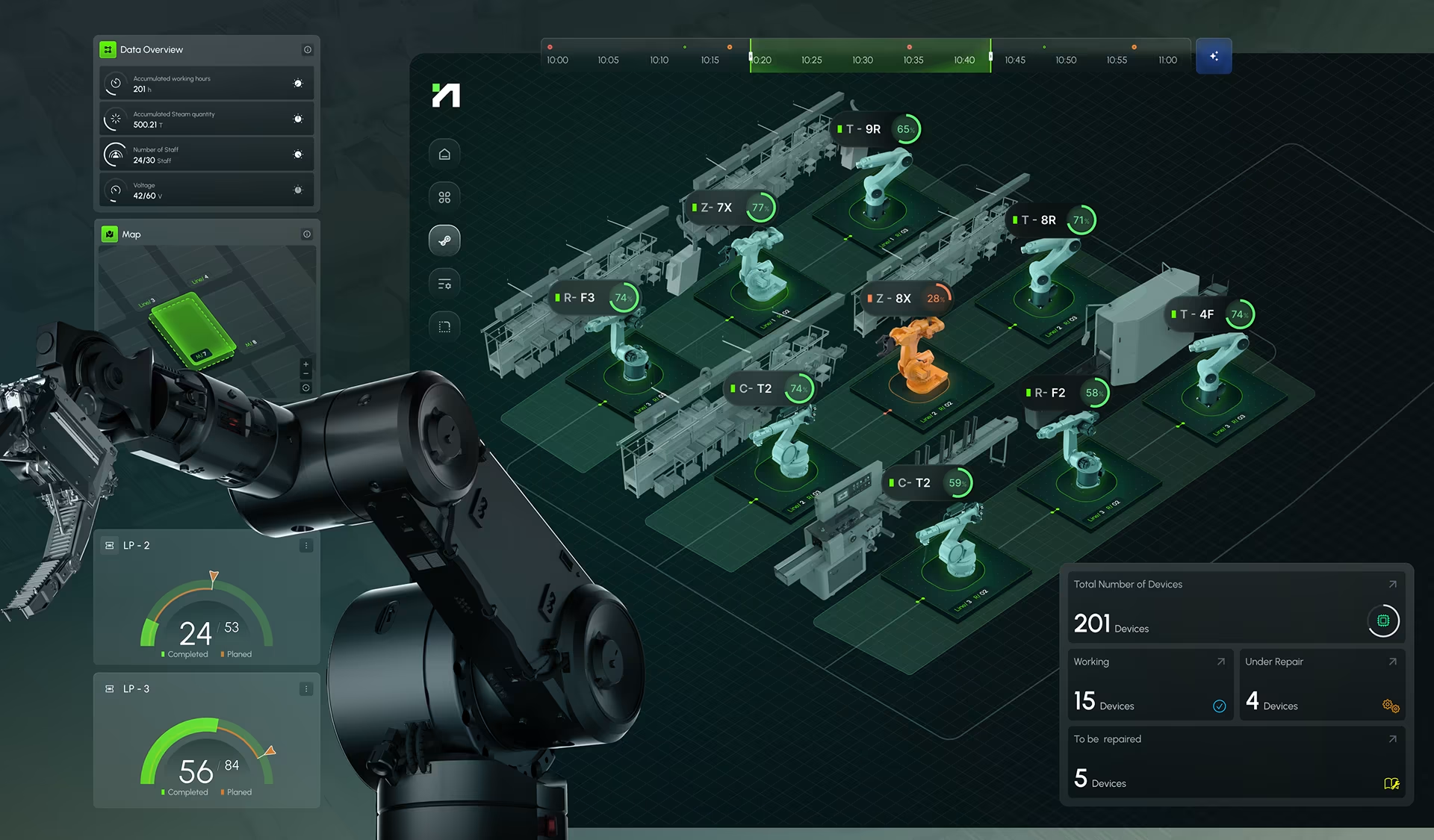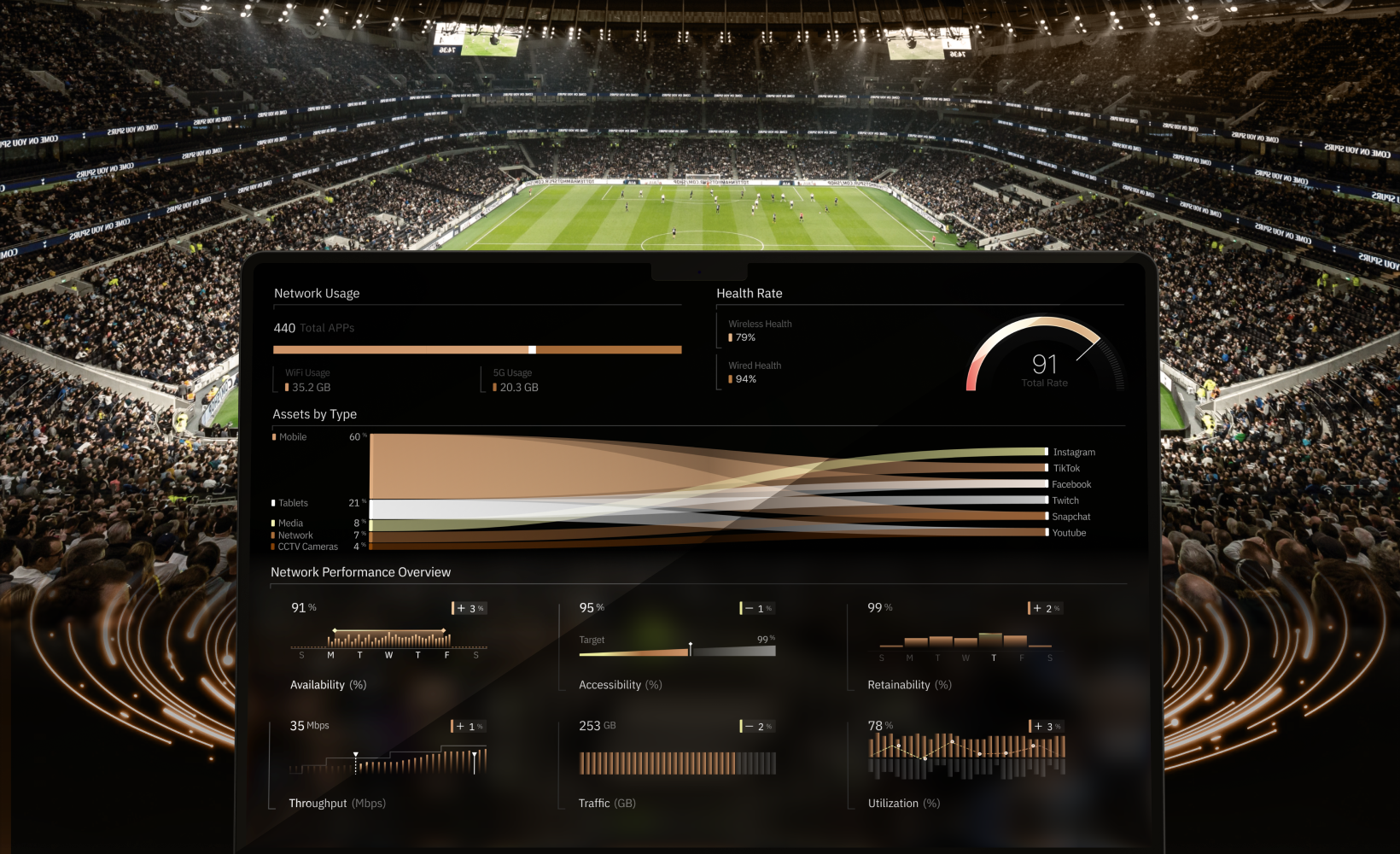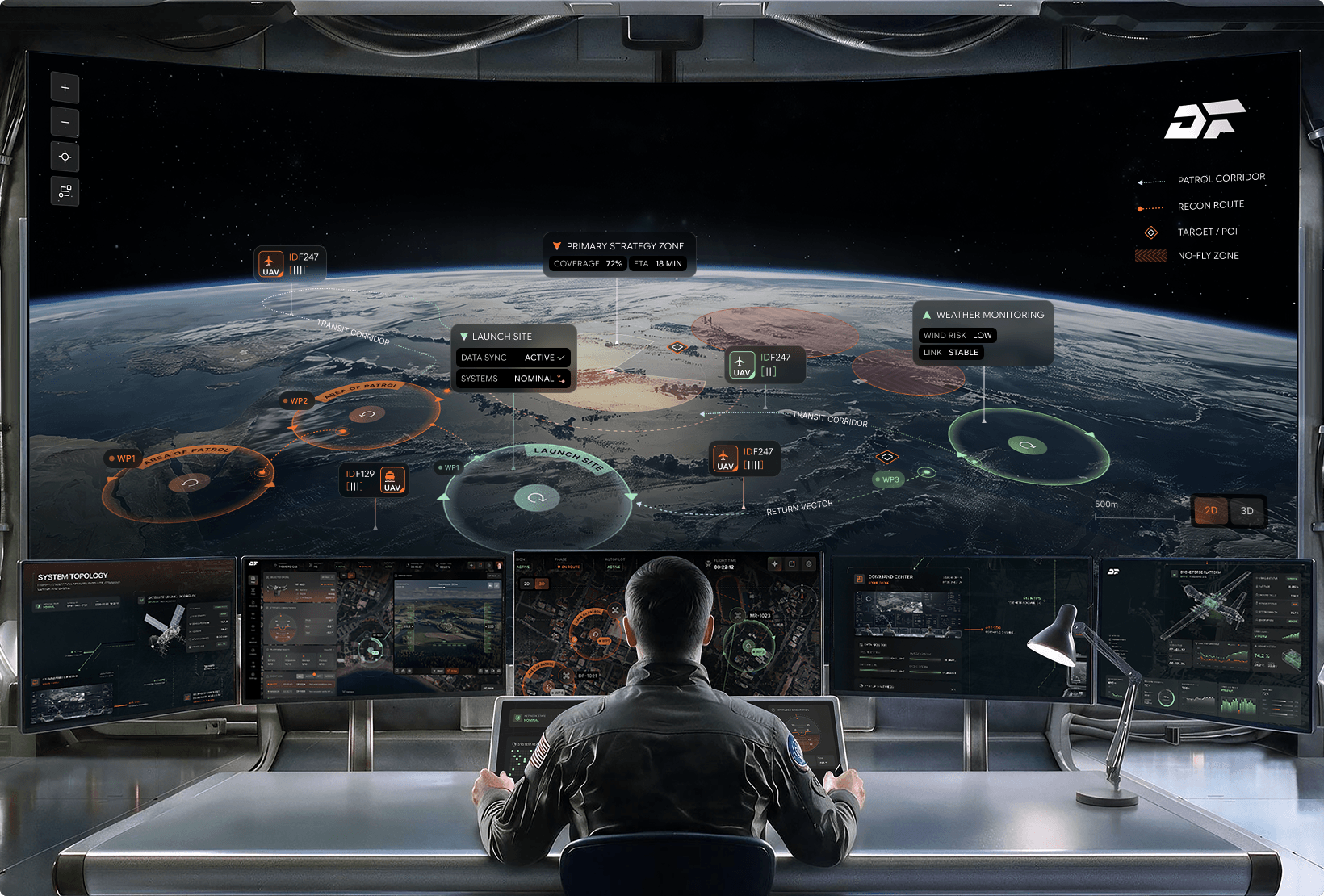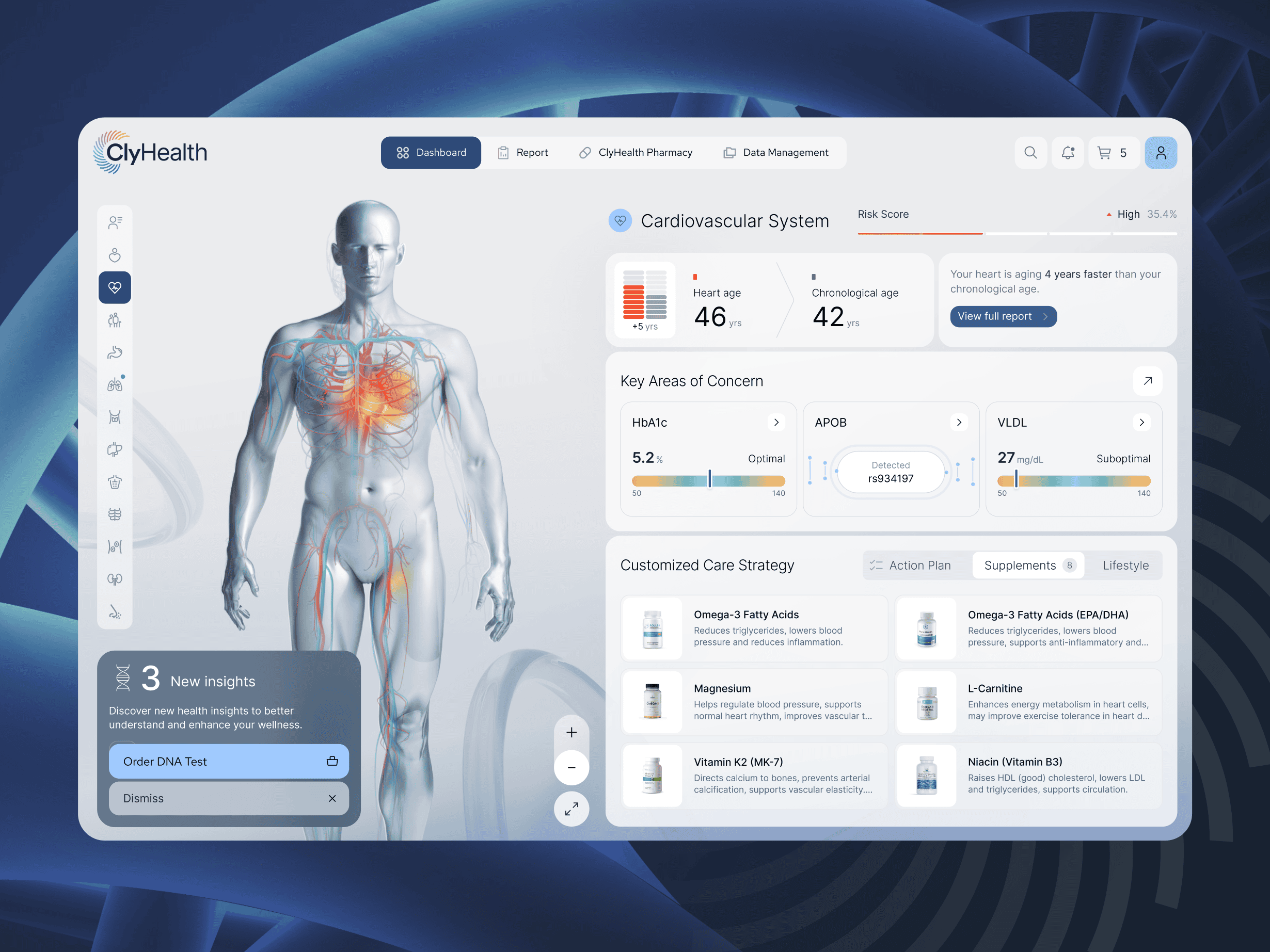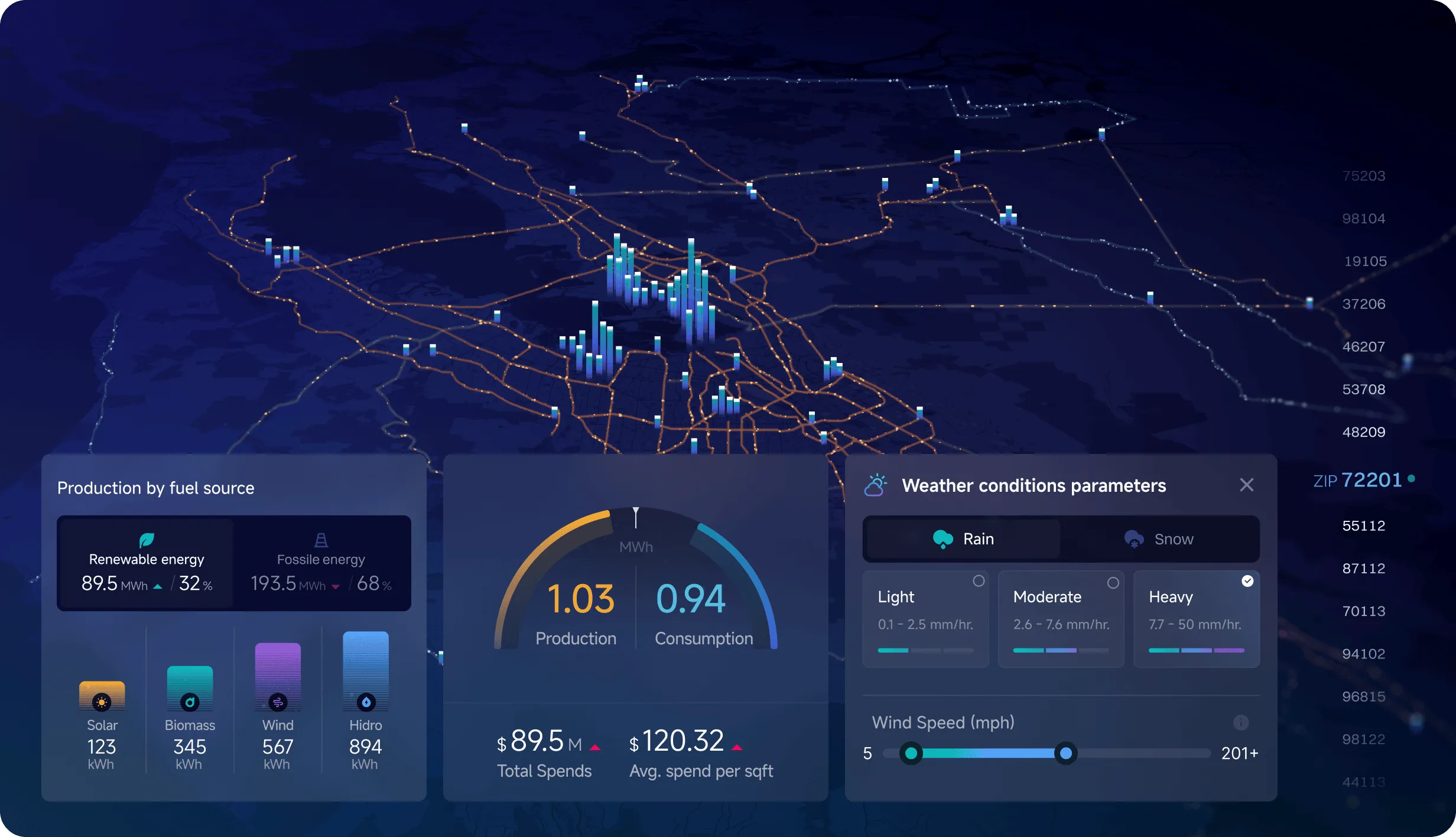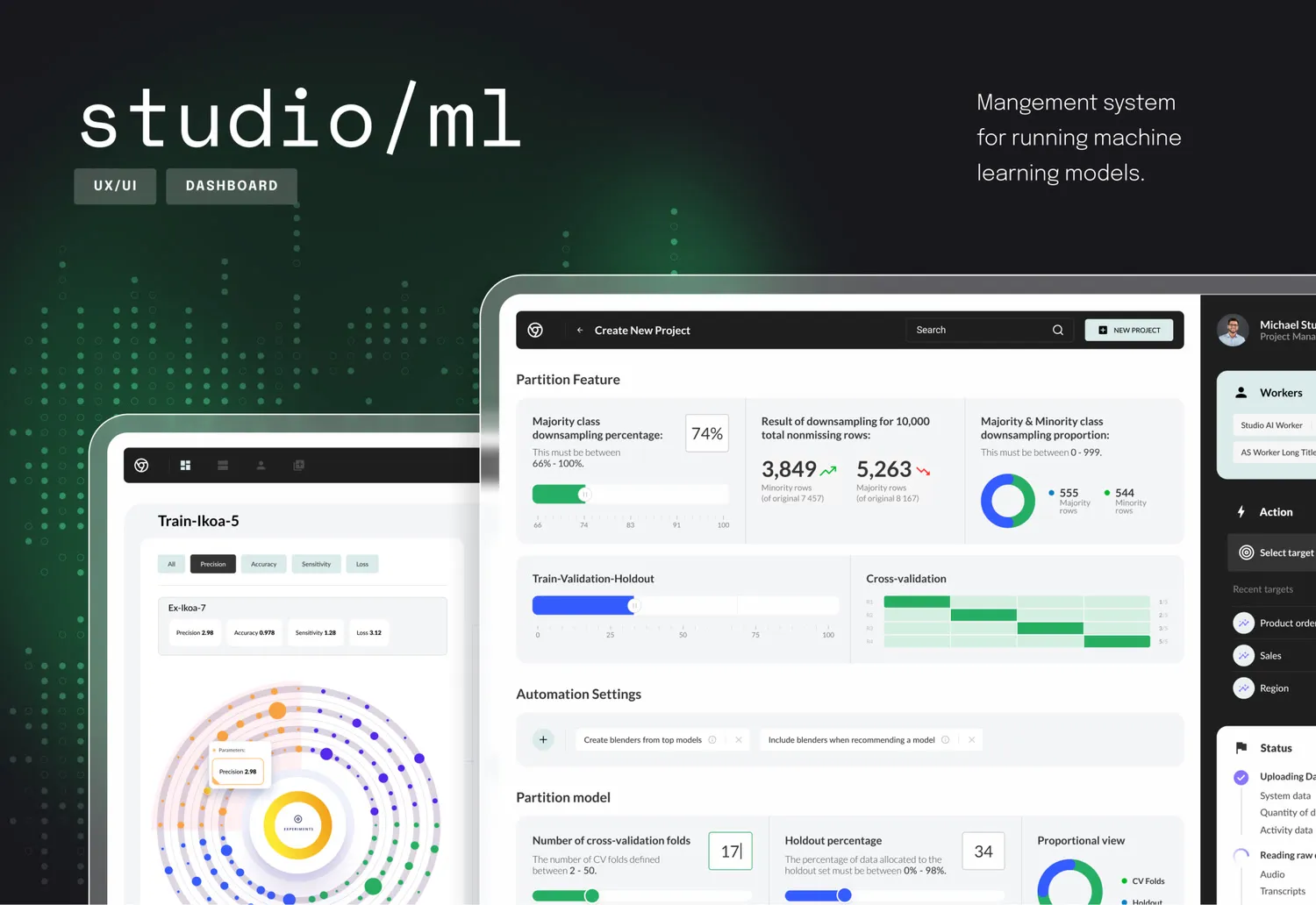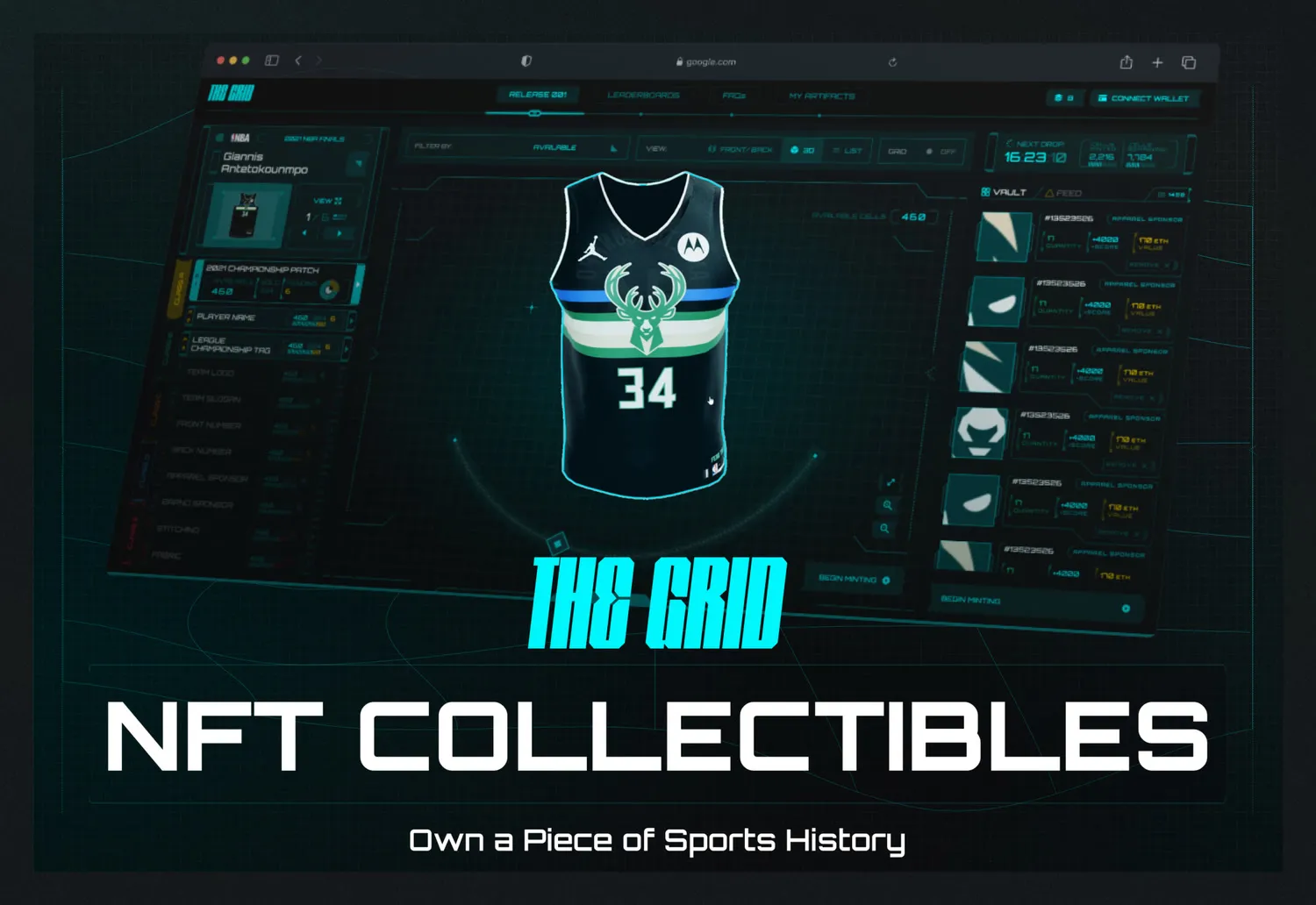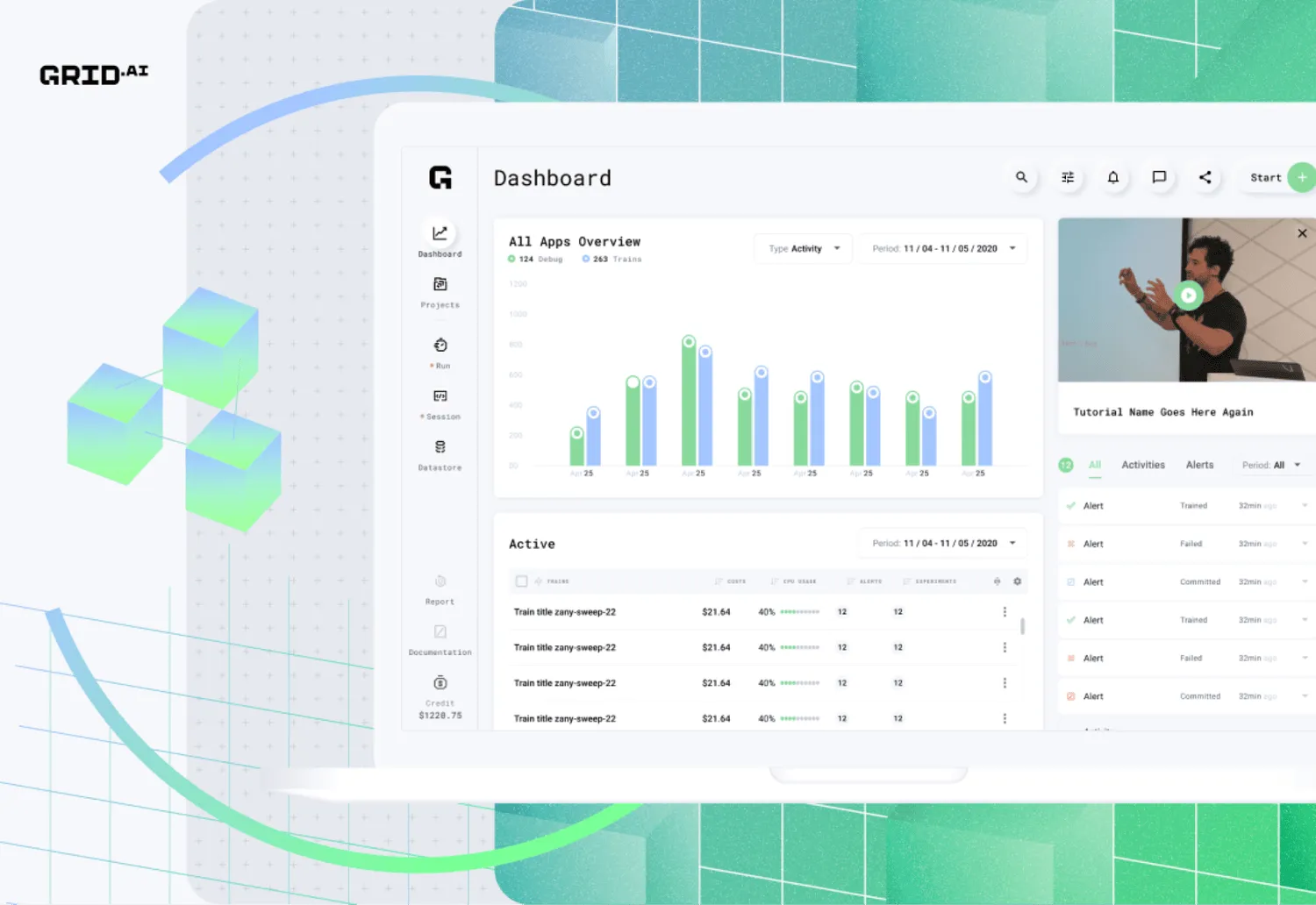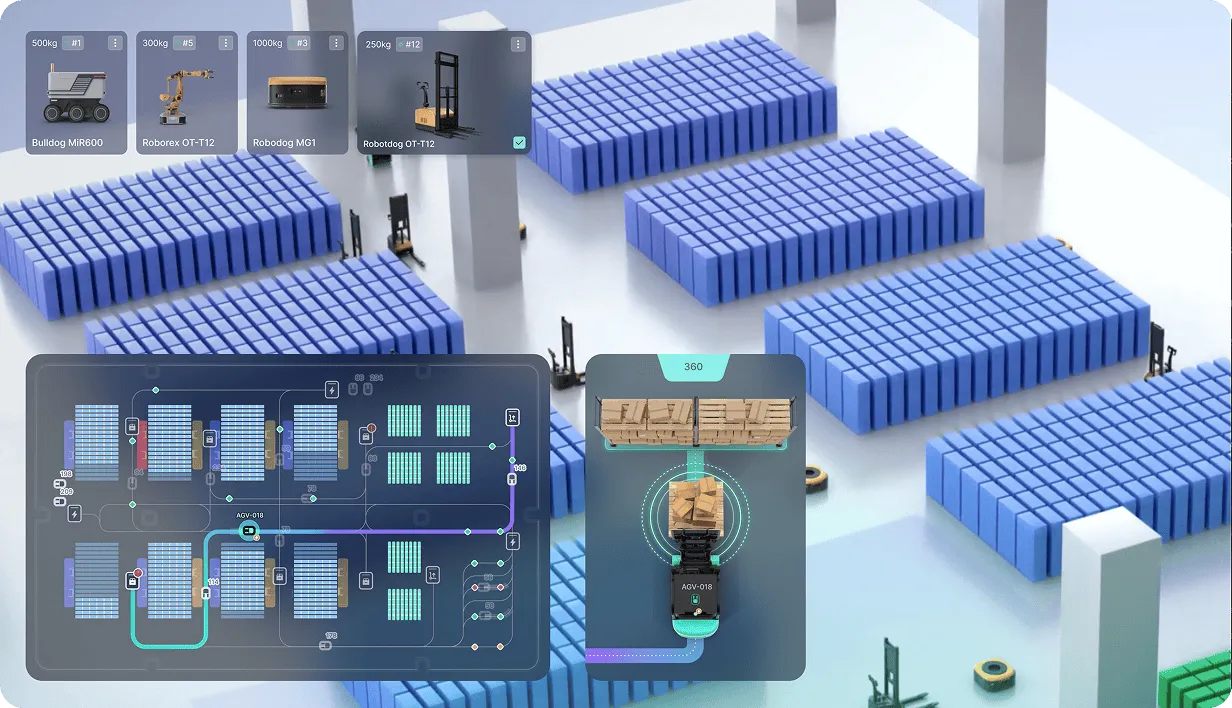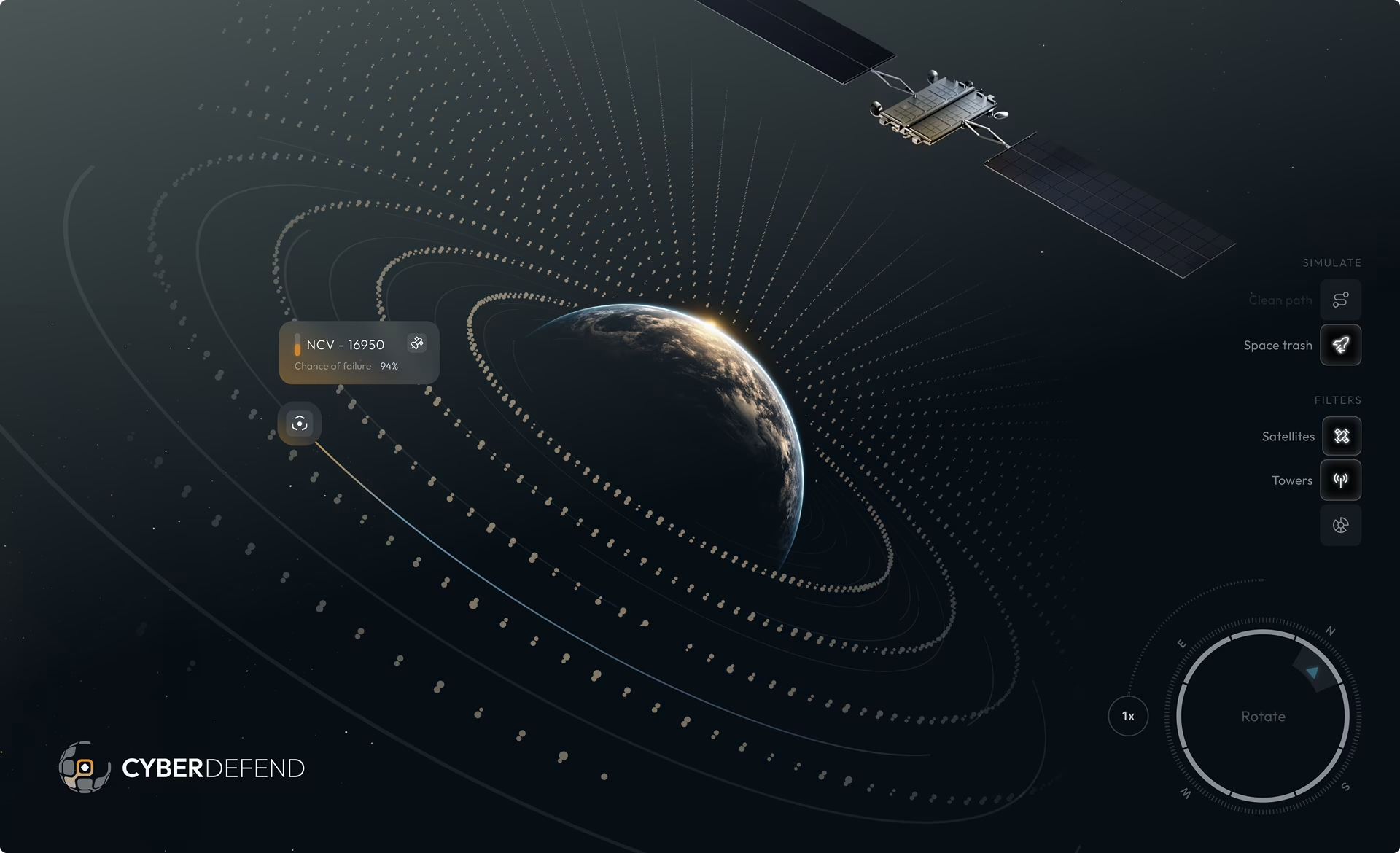
CyberDefend is a platform designed includes a real-time dashboard design that allows users access to critical data. The platform provides a 360-degree view of all situational awareness data, including security, traffic, and system health. The dashboard integrates multiple data points for seamless cybersecurity decision-making.
Monitoring Satellite Performance & Failures
Operators have revolutionary views into what’s happening in orbit, including precise positions, velocities, and predicted paths of relatively near by satellites and debris. Obviously, this kind of real-time intelligence helps to avoid catastrophic collisions in space.SecDefend is able to integrate tracking data from ground radars, optical sensors, and partner networks. Features of particular importance include, live tracking of objects in orbit, long-term orbit propagation and prediction, and fusion of multiple sensor data sources
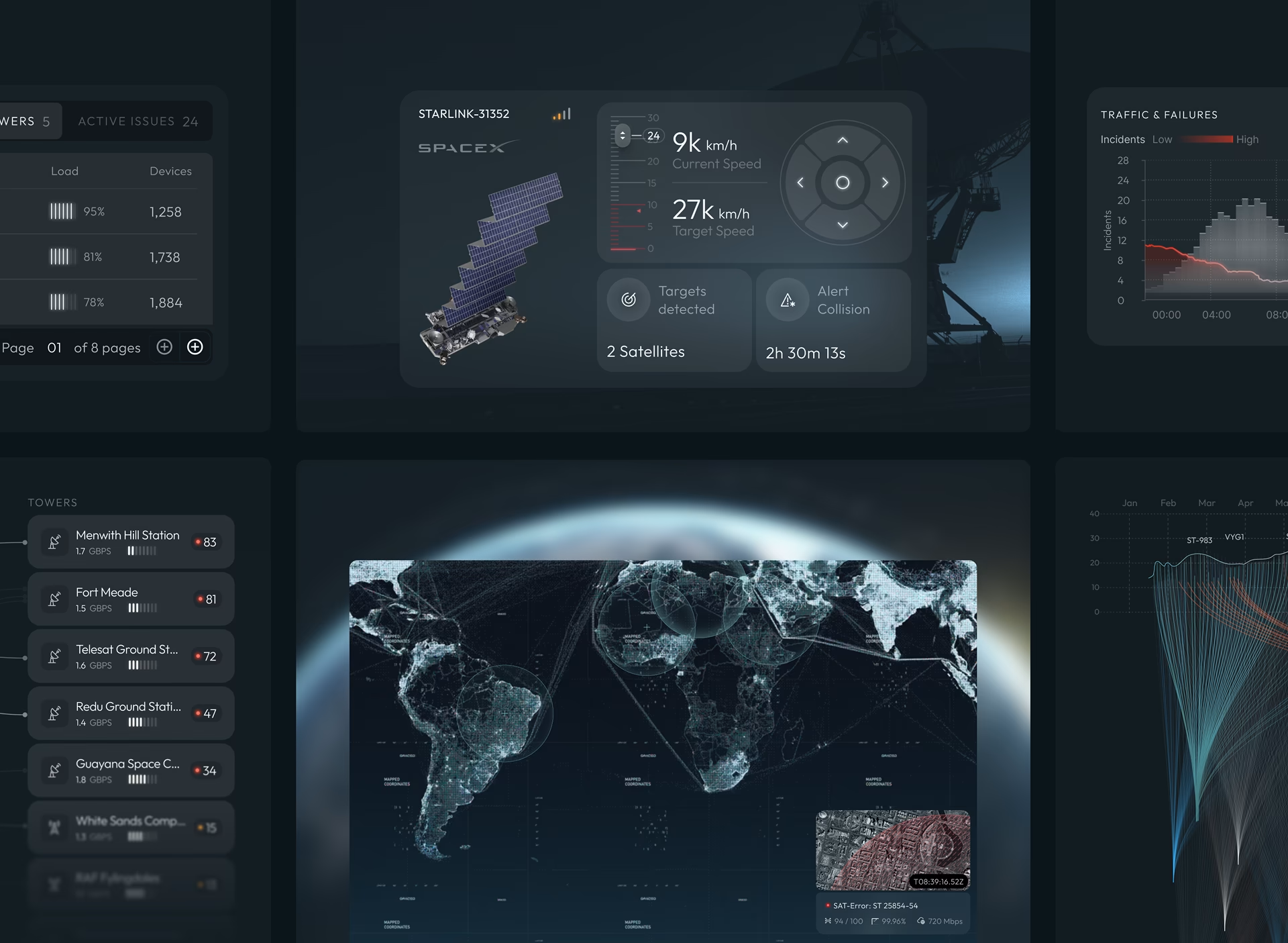
Space Operations UI UX Design
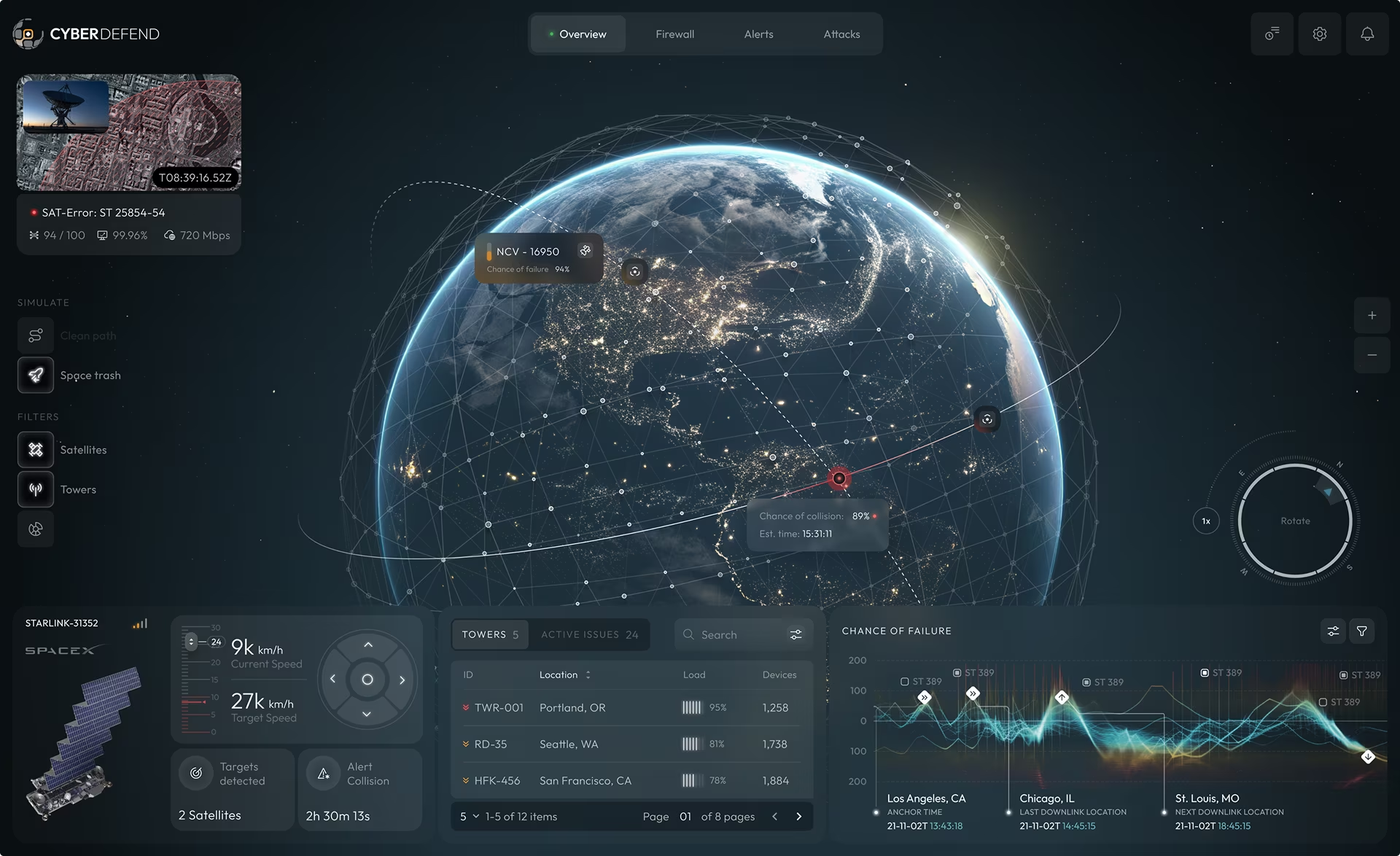
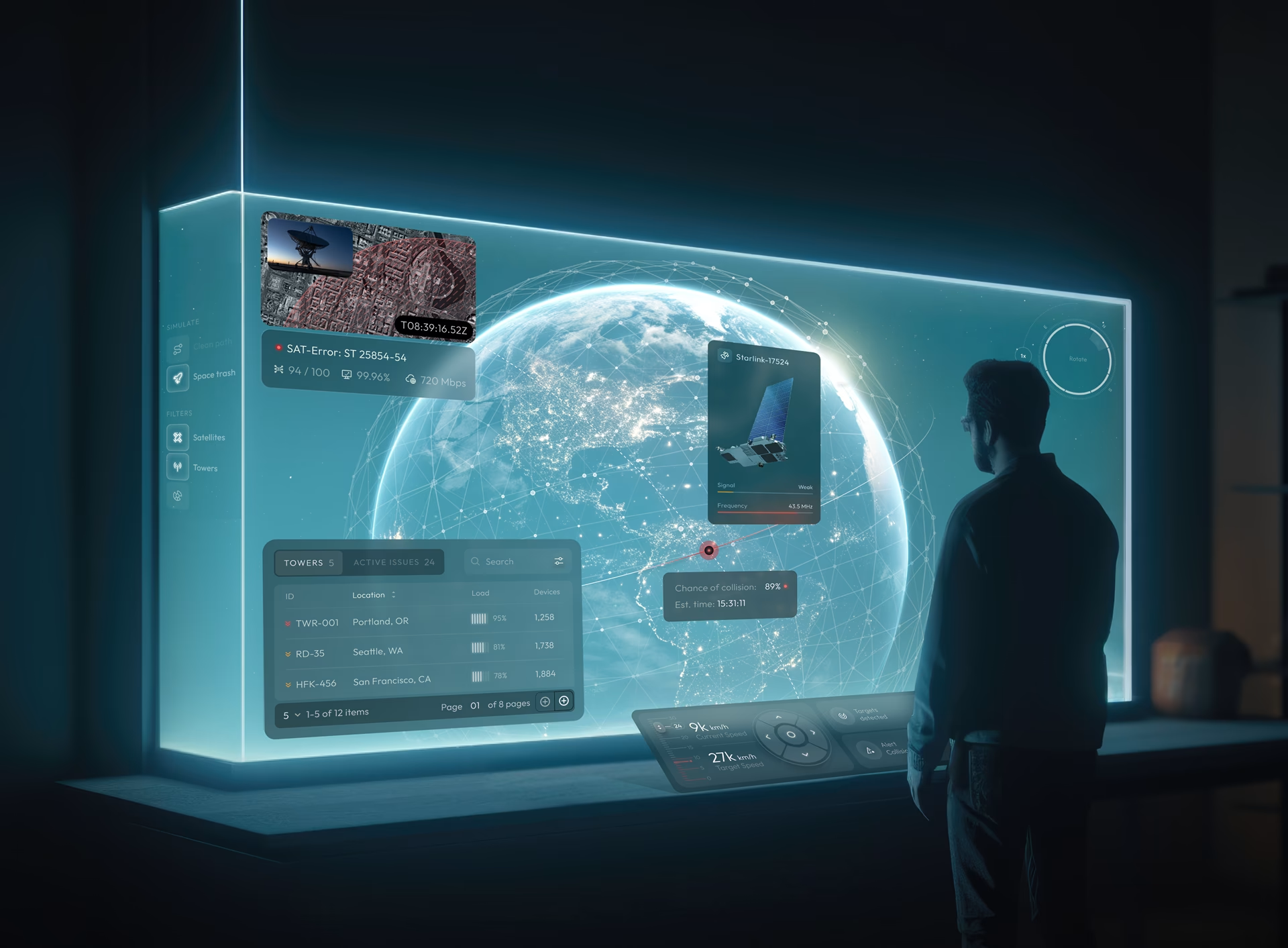
CyberDefend space operations platform is built around an intuitive space operations UI UX that gives operators full command over satellite functionality and security from a single, unified interface.
The real-time dashboard delivers comprehensive space situational awareness, pulling in live data streams that cover everything from orbital positioning to threat detection, ensuring no critical event goes unnoticed. With advanced satellite traffic management capabilities, the platform monitors and regulates data flow across all connected assets, reducing the risk of congestion, interference, or unauthorized access.
The satellite constellation interface is especially engaging with as it seamlessly consolidates multiple satellites into one cohesive control environment, giving operators a clear 360-degree view of system health, performance metrics, and security status at a glance. Through intelligent space traffic coordination, CyberDefend empowers teams to make fast, confident cybersecurity decisions while keeping every node in the constellation operating at peak efficiency.
Detecting and Responding to Cybersecurity Threats
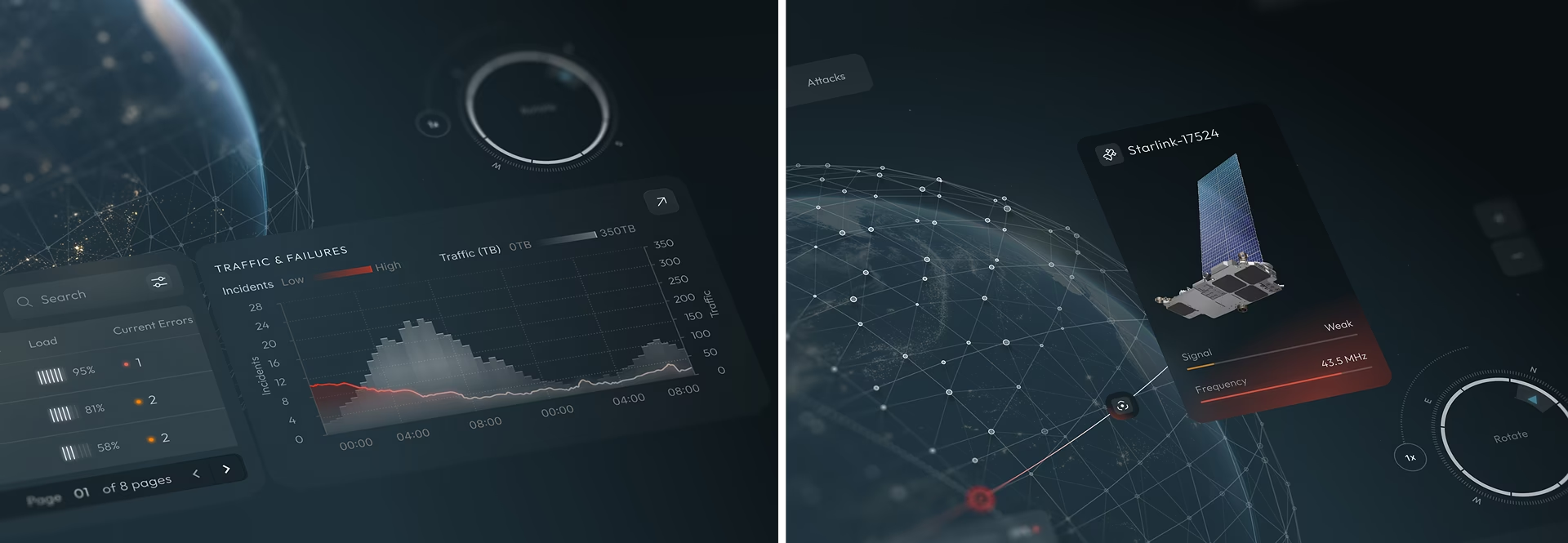
CyberDefend’s threat detection capabilities are built on continuous, intelligent monitoring that keeps every layer of the satellite network under constant surveillance, with orbital traffic visualization tools translating complex data streams into clear, actionable displays that allow security teams to immediately recognize unauthorized access attempts or anomalous signal behavior across the constellation. Much like how aviation relies on transponder-based tracking, CyberDefend’s ADS-B-like system for satellites ensures every asset is consistently broadcasting and receiving telemetry data.
At the heart of the platform is a real-time orbital tracking dashboard that delivers a live, continuously updated view of every satellite’s position, health status, and security condition, giving operators the situational clarity. When danger arises, the platform’s collision avoidance interface plays a dual role, protecting against physical orbital hazards while also flagging erratic or manipulated movement patterns that can signal a cyberattack targeting a satellite’s navigation or control systems.
Network Load and Zoom-In Issue Tracking
The platform’s space operations UI UX is engineered to handle the demands of high network load environments, dynamically scaling its data processing and display capabilities to ensure operators receive clear, uninterrupted visibility into system performance. Our human-machine interface for space control simplifies the complexity of managing multiple satellites simultaneously, (which is no easy task) presenting network load data in an intuitive format that allows operators to quickly pinpoint congestion points, bandwidth strain, and bottlenecks before they screw up mission-critical operations.Through precise visualization of satellite trajectories, CyberDefend gives operators the incredible ability to zoom in on specific assets or regions of concern, drilling down into granular performance metrics and issue tracking data that reveal the root cause of network irregularities. By integrating these capabilities within its broader space vehicle traffic control systems, the Fuselab design creates a seamless workflow where network load monitoring and zoom-in issue tracking work hand-in-hand. We know, pretty cool huh.
Interface Anomaly Detection
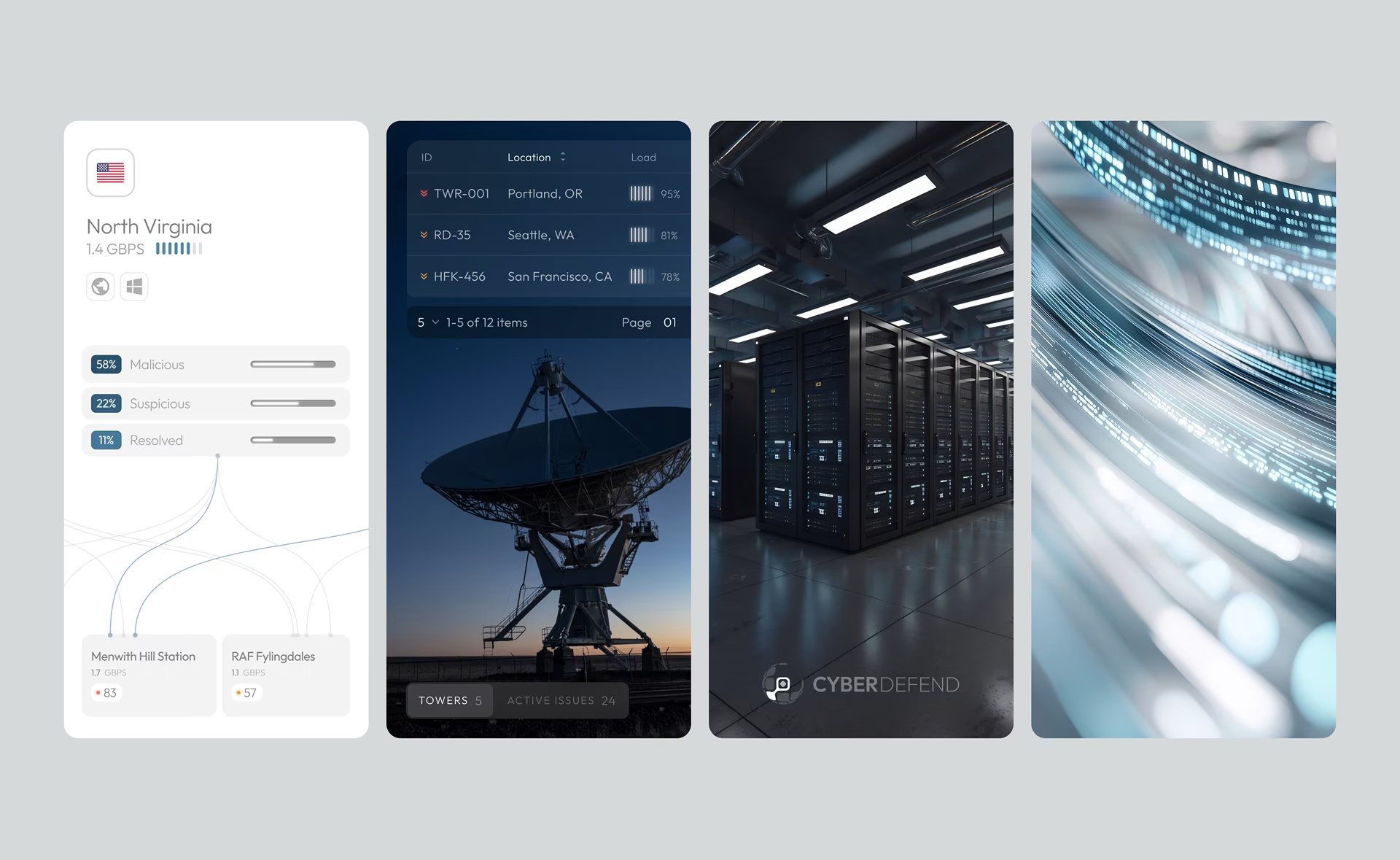
Effective anomaly detection interfaces surface flagged events alongside their domain-specific activity logs, creating clear visual connections between a triggered alert and the exact sequence of actions that preceded it. If only we could design something like this for parenting teenagers. Designing these linkages requires contextual threading — where a flag in, say, a network or authentication domain immediately pulls up correlated log entries, timestamps, and behavioral baselines within the same view. The UI should make cause-and-effect relationships scannable at a glance, using spatial proximity, color-coded severity indicators, and drill-down panels so analysts can trace an issue from the flag all the way through its domain activity trail without switching contexts. Sounds crazy right, but it’s actually possible with the right team on your side.